Discover the top UK online casinos with ELK Studios slots. Our 2026 guide covers licensing, RTP, volatility, bonuses, and a ranked comparison table of 9 trusted operators. see the full casino ranking
Discover the top UK online casinos with ELK Studios slots. Our 2026 guide covers licensing, RTP, volatility, bonuses, and a ranked comparison table of 9 trusted operators. see the full casino ranking
Discover the best Endorphina online casinos in the UK for 2026. Compare top sites offering Endorphina slots, bonuses, free spins, and high RTP games. Expert picks and in-depth reviews. read our guide to the best Endorphina casinos
Discover the 10 best UK casinos offering Evolution Gaming in 2026. Compare live dealer games, bonuses, payout speeds, and legal status to find your perfect site. read our expert guide to the best Evolution Gaming casinos in the UK
An honest, data‑driven ranking of the UK's fastest paying online casinos in 2026. We tested withdrawal speeds across dozens of operators to separate the one‑hour cashout champions from the marketing hype. Real brands, verified figures, and practical advice for getting your money without the runaround. compare the fastest paying UK casino sites
Find the best first deposit bonus casinos UK 2026 with expert comparisons. We rank top welcome offers, low‑wagering deals, and no‑wagering bonuses for slots, live games, and mobile. read the complete guide to the best first deposit bonus casinos UK 2026
Discover the top foreign casinos accepting UK players in 2026. Compare bonuses, games, licenses, and risks, and learn how to choose a safe offshore site. explore the best foreign casinos
Find the top Greentube online casinos in the UK for 2026. Compare bonuses, game selections, and trusted sites with our comprehensive guide. read our full guide on the best Greentube casinos
Discover the top UK-friendly online casinos featuring Habanero slots and games for 2026. Expert reviews, exclusive bonuses, fast payouts, and a complete guide to choosing the safest and most rewarding Habanero casino sites. explore the best Habanero casinos for UK players
Find the best high roller casino bonuses in the UK for 2026. We rank trusted sites with high stakes tables, fast withdrawals, and VIP rewards that actually deliver. read our full guide to high roller casino bonuses
Discover the best high volatility slots in the UK for 2026. Our expert guide covers top games, casinos, strategies, and the real meaning of high volatility—so you can spin smarter. find the best high volatility slots for UK players
When applied over the surface of a tooth, it can cover worn tooth enamel, uneven tooth alignment or spacing and chips or cracks.
Dental veneers fall into the category of cosmetic dentistry because they create a bright, white smile with beautifully aligned, shapely teeth. Even better, the translucent ceramic quality of today’s veneers provides a more natural look than what’s been available in the past.
Book an Appointment

A precise shade of porcelain can be chosen to give the right colour to improve a single discoloured or stained tooth or to lighten front teeth (usually the upper ones) generally.
A veneer can make a chipped tooth look intact again. The porcelain covers the whole of the front of the tooth with a thicker section replacing the broken part. Veneers can also be used to close small gaps when orthodontics (braces) are not suitable.
If one tooth is slightly out of position, a veneer can sometimes be fitted to bring it into line with the others. Veneers make teeth look natural and healthy.
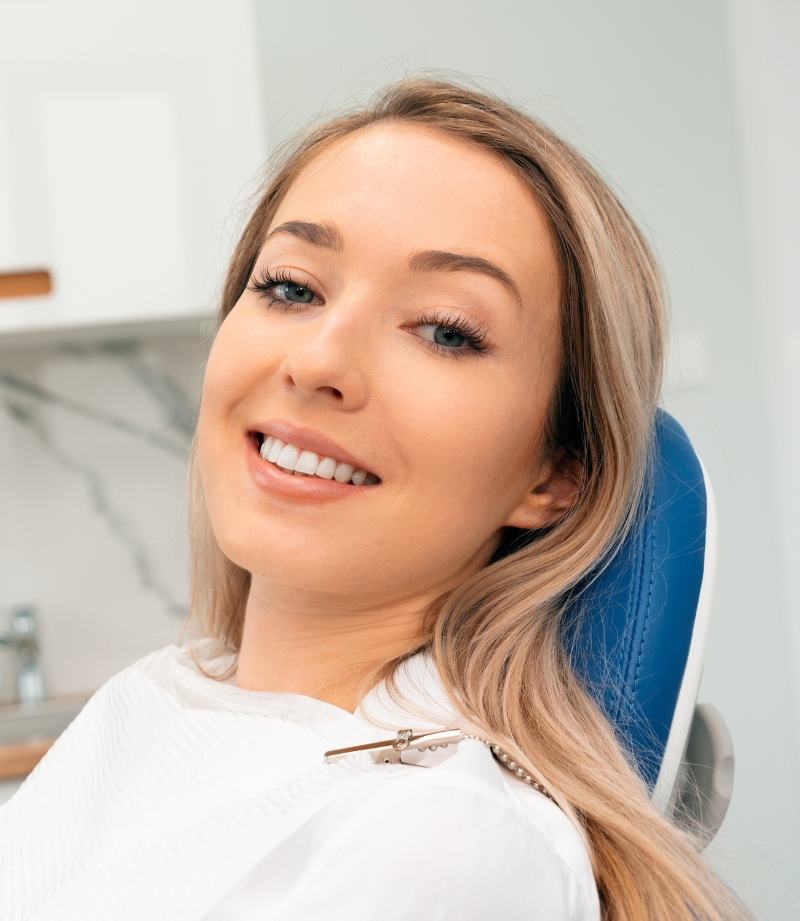

Because veneers are very thin and are held in place by a special, strong bond (rather like super-glue), very little preparation of the tooth is needed. Some of the shiny outer enamel surface of the tooth may be removed to make sure that the veneer can be bonded permanently in place later. The amount of enamel removed is tiny and will be the same as the thickness of the veneer to be fitted, so that the tooth stays the same size. A local anaesthetic may be used to make sure that there is no discomfort, but often this is not necessary. Once the tooth has been prepared, your dentist will take an ‘impression’ (mould). This will be given to our dental technician, along with any other information needed to make the veneer. The colour of the surrounding teeth is matched on a shade guide to make sure that the veneer will look entirely natural.
A veneer takes at least two visits: the first to prepare the tooth and to match the shade, and the second to fit it. Before bonding it in place, your dentist will show you the veneer on your tooth to make sure you are happy with it. Bonding a veneer in place is done with a special adhesive, which holds it firmly on the tooth. Because the preparation of the tooth is so slight, you will probably not need a temporary veneer. The tooth will look very much the same after preparation, but will feel slightly less smooth. Only minor adjustments can be made to the veneer after it is fitted. It is usually better to wait a little while to get used to it before any changes are made. Your dentist will probably want to check and polish it a week or so after it is fitted, and make sure that you are happy with it.

“I don’t normally do reviews, well, not good ones anyway, but on this occasion I will. Having neglected my teeth for over 7 years due…
“I had the best experience I’ve ever had at a dentist at Buckden Dental Clinic. The staff are all wonderful, from the receptionists to the…
“We were recommended Buckden Dental Clinic and are so glad we were. We recently joined Buckden Dental Clinic after moving to the area and being…
“I have the utmost confidence that any dental work advised by Kam. I have been a patient of Kam for almost two years. During that…
“The hygienist today is the best one I have ever been to. I just wanted to tell you the hygienist today is the best one…
What are the restorative benefits of veneers?

In addition to being aesthetically pleasing, dental veneers can also serve a functional purpose by protecting the surface of a damaged tooth. In some cases, veneers may replace the need for a dental crown, eliminating the need for more invasive tooth preparation. However, because dental veneers are so thin, they might require little to no tooth reshaping when bonded onto the tooth. Once veneers are bonded into place, they are relatively strong and durable; however, care must be taken so as not to abuse veneers because the thin porcelain shells can damage or break.
Your dentist may advise you against certain uses or dietary tendencies (such as eating carrots) and may recommend you wear a protective appliance while you sleep, especially if you grind your teeth.

 Follow us on Instagram