Teeth grinding or ‘Bruxism’ is the involuntary grinding or clenching of the teeth through repetitive jaw muscle activity. It is a common condition with up to 30% of the population being affected.
This is a subconscious behaviour done mainly while you sleep, known as ‘sleep bruxism’. Sometimes it is your sleep partner who tells you after being kept awake by your grinding. This is why it is normally your dentist or hygienist who will first see the wear on your teeth and inform you about your grinding.
You can also clench and grind your teeth when you’re awake, known as ‘awake bruxism’. This is more common in women than in men. There are a few factors that can contribute to Bruxism, including stress and anxiety and the anatomy of the jaw.
Book an Appointment

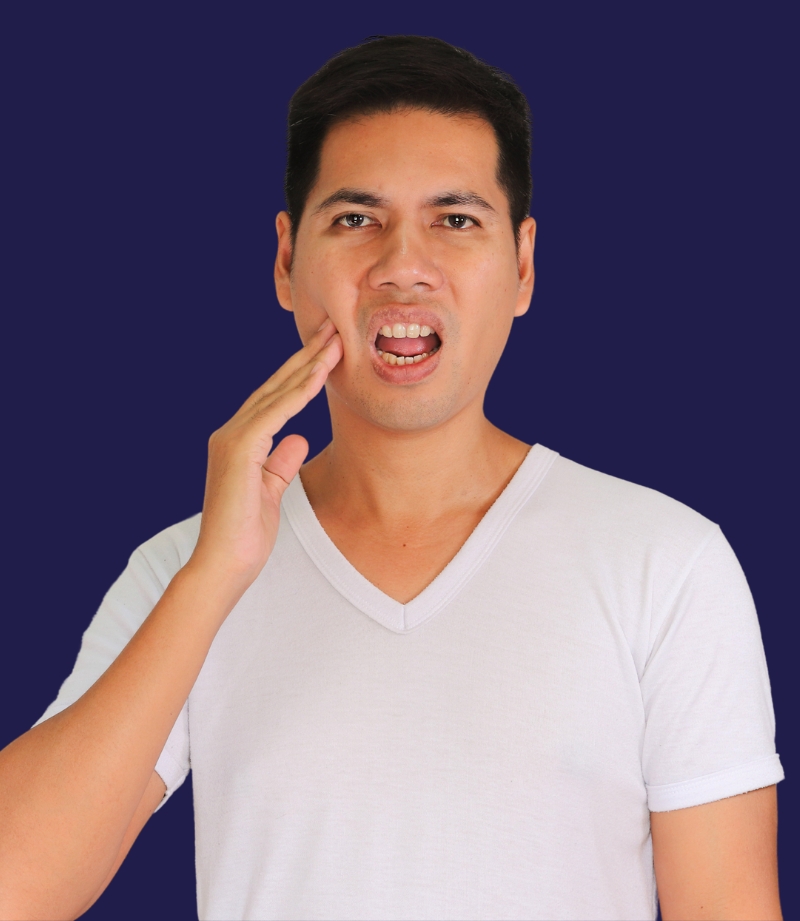
The name TMD refers to pain in the temporomandibular joint region (TMJ). As well as pain, you may experience other symptoms such as a clicking jaw and restricted opening.

We always start with the simplest and least invasive treatment first.
We can give you instructions for jaw exercises that may help to alleviate any painful symptoms.
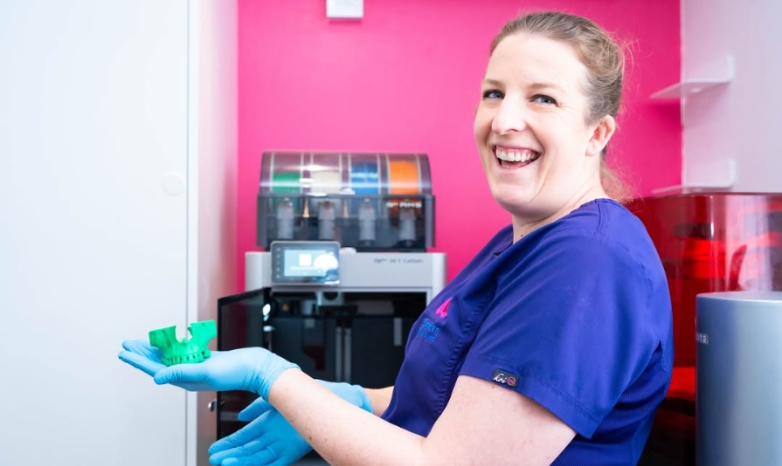
We can take a scan of your mouth and make a custom-made night guard. These can be made with either hard or soft material, depending on your needs. They can either be made for the upper or lower teeth. These mouthguards will help protect your teeth from damage and wear and manage your grinding habit.
We can administer a muscle relaxant into each side of the jaw. This is the same medication that’s used to relax muscles on the forehead and around the eyes. This is a safe and effective treatment to relax the jaw muscles and prevent bruxism. The effects are normally felt a few days after treatment and can last up to 3-4 months. Each time the treatment is done, the bruxism lessens.
This can also result in ‘jaw slimming’ as the muscles reduce in size, slimming the face. However, do not be confused with ‘jaw slimming’ treatment, as often these treatments are not performed in the same way and don’t penetrate deep enough into the muscles to stop the tooth grinding.
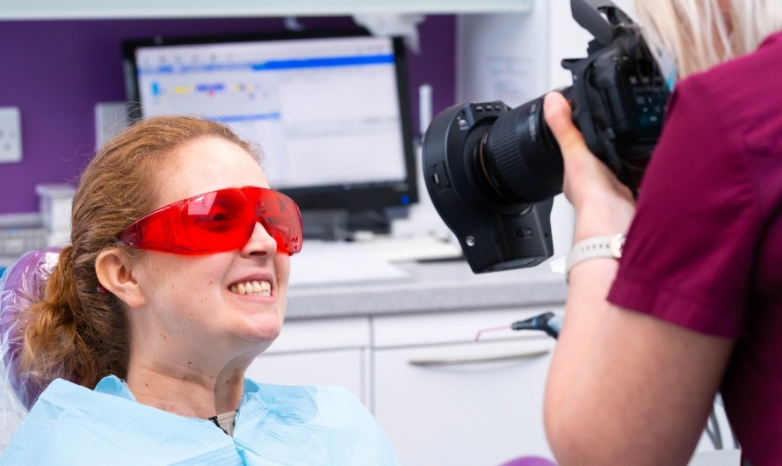
We can also offer dental laser treatment to relax the muscles. This works well after dental treatment when you’ve had to keep your mouth open for an extended period of time. We use the laser externally on the joint after treatment. The heat from the laser relaxes the joint muscle and prevents it from going ‘stiff’ or ‘locking’.
If you suffer from TMD, ask your dentist about the option of laser treatment after your dental treatment to prevent jaw pain afterwards.

“I don’t normally do reviews, well, not good ones anyway, but on this occasion I will. Having neglected my teeth for over 7 years due…
“I had the best experience I’ve ever had at a dentist at Buckden Dental Clinic. The staff are all wonderful, from the receptionists to the…
“We were recommended Buckden Dental Clinic and are so glad we were. We recently joined Buckden Dental Clinic after moving to the area and being…
“I have the utmost confidence that any dental work advised by Kam. I have been a patient of Kam for almost two years. During that…
“The hygienist today is the best one I have ever been to. I just wanted to tell you the hygienist today is the best one…
What impact does bruxism have on me?

Bruxism can cause a range of symptoms, including:

 Follow us on Instagram